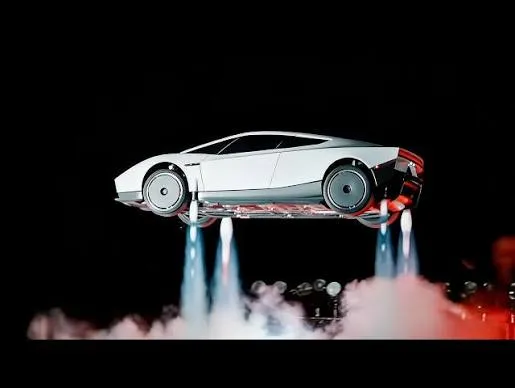
On October 15, 2026, Tesla unveiled its next-generation Roadster at a SpaceX test facility in McGregor, Texas, showcasing groundbreaking flying car technology. The prototype, equipped with SpaceX-designed cold-gas thrusters and underbody suction fans, performed aerial stunts including mid-air flips and a 0–60 mph acceleration in 0.81 seconds. Elon Musk described the event as a fusion of "the world’s best car company and the world’s best rocket company."
The Technology Behind the Flying Roadster
The Roadster's flying capabilities are powered by a combination of cold-gas thrusters and suction fans, developed in collaboration with SpaceX. These thrusters use ultra-high-pressure air tanks and 10 nozzles to propel the car into the air, enabling maneuvers like climbing curved ramps, clinging upside down, and landing safely. The prototype was operated remotely during the demonstration to ensure safety.
Tesla plans to offer three configurations: a high-performance road version, a Thrust model with rear thrusters, and an invite-only Rocket variant with a full flight system. While the Rocket variant could potentially seat only one passenger, Musk emphasized that the car is not yet optimized for safety on public roads.
The cold-gas thrusters used in the Roadster are derived from SpaceX’s Falcon rocket technology, which allows for precise control and rapid thrust adjustments. This technology is critical for maintaining stability during flight maneuvers. Additionally, the suction fans integrated into the underbody create a vacuum effect, enabling the car to adhere to surfaces or hover at low altitudes. These fans are powered by Tesla’s advanced battery systems, ensuring minimal energy consumption during flight.
To address potential safety concerns, Tesla engineers have incorporated multiple redundancies into the flight system, including backup thrusters and fail-safe mechanisms. The company is also developing AI-driven software to assist pilots in navigating complex aerial environments. However, the system’s reliance on remote operation during the demonstration highlights the current limitations in autonomous flight capabilities.
Performance Specs and Production Timeline
The Roadster prototype achieved a 0–60 mph time of 0.81 seconds during the demonstration, with Musk claiming production versions could surpass this. Tesla aims for a top speed exceeding 230 mph, with ambitions to approach half the speed of sound (roughly 383 mph). Production is slated for 2028, though Tesla has a history of ambitious timelines that often slip.
Key Performance Metrics:- 0–60 mph: 0.81 seconds (prototype)
- Top speed: 230+ mph
- Production target: 2028
The Roadster’s acceleration is made possible by its lightweight carbon-fiber chassis and advanced electric powertrain. Tesla’s engineers have optimized the vehicle’s aerodynamics to reduce drag during high-speed travel, while the cold-gas thrusters provide additional propulsion for rapid acceleration. The car’s top speed goal of 230 mph places it among the fastest production vehicles ever made, though achieving half the speed of sound would require further technological breakthroughs.
Tesla’s production timeline hinges on overcoming several engineering and logistical challenges. The company must scale up manufacturing for the Roadster’s unique components, including the cold-gas thrusters and suction fans. Additionally, Tesla will need to secure partnerships with suppliers capable of producing specialized materials at scale. Given the complexity of the Roadster’s design, industry analysts predict delays beyond the 2028 target.
Regulatory Challenges
The Roadster's flying capabilities raise significant regulatory questions. Musk acknowledged that the car is "not necessarily a safety-optimized car" and that its legality remains unclear in many jurisdictions. The Federal Aviation Administration (FAA) will likely play a key role in determining whether the car can operate on public roads. Tesla will need to address safety certifications and practical use concerns before widespread adoption.
One of the primary regulatory hurdles is the classification of the Roadster as either a vehicle or an aircraft. Current FAA regulations distinguish between ground-based vehicles and flying machines, with stringent requirements for the latter. Tesla may need to collaborate with regulatory bodies to develop a new classification that accommodates hybrid vehicles like the Roadster. Additionally, the company must address concerns about noise pollution, airspace congestion, and the potential for accidents.
Tesla’s legal team is also working to navigate international regulations, as the Roadster’s flying capabilities may face restrictions in certain countries. For example, European Union aviation authorities have stricter safety standards than the FAA, which could complicate the Roadster’s introduction in European markets. Tesla’s ability to address these regulatory challenges will be critical to the vehicle’s success.
Competition in the Flying Car Space
Tesla's Roadster isn’t the only flying car in development. Companies like Alef Aeronautics have already logged over 1,000 flights with their electric flying car. Alef’s vehicle uses distributed electric propulsion (DEP) and recently released a video flying over a Tesla Roadster, jokingly welcoming it to the flying car race. Other competitors include Aeromobil, AirCar, and Jetson ONE, though none have yet achieved mass production.
Alef Aeronautics’ flying car, which resembles a sleek sedan, is designed for urban mobility and short-distance travel. The vehicle’s DEP system allows for vertical takeoff and landing (VTOL), making it suitable for use in densely populated areas. Alef has partnered with city governments to conduct pilot programs, aiming to integrate flying cars into existing transportation networks. While Alef’s vehicle is still in the testing phase, its progress highlights the competitive landscape Tesla faces.
Aeromobil and AirCar, both based in Europe, are focusing on hybrid designs that combine traditional automotive features with flight capabilities. Aeromobil’s prototype resembles a sports car with retractable wings, while AirCar emphasizes ease of use with a simple cockpit design. Jetson ONE, a Swedish startup, is targeting the personal aviation market with a lightweight, single-seat flying vehicle. Despite their differences, these competitors share Tesla’s vision of revolutionizing transportation through flying cars.
Public Reception and Skepticism
While the Roadster's demonstration was impressive, skeptics argue that flying cars are impractical for everyday use. Critics point to safety concerns, regulatory hurdles, and the high cost of production as barriers to widespread adoption. However, Musk remains optimistic, stating on X, "Turns out the future does have flying cars."
Public opinion on the Roadster is divided. Enthusiasts applaud Tesla’s innovation and see the vehicle as a symbol of technological progress. However, critics question the practicality of flying cars, citing issues such as energy consumption, maintenance costs, and the need for specialized infrastructure. Some experts argue that flying cars are better suited for niche applications, such as emergency response or luxury travel, rather than mass-market adoption.
Despite skepticism, Tesla’s Roadster has generated significant media attention and public interest. The vehicle’s futuristic design and groundbreaking technology have captured the imagination of consumers worldwide. Whether the Roadster becomes a commercial success or remains a concept vehicle will depend on Tesla’s ability to address these concerns and deliver on its promises.
What’s Next for Tesla?
Tesla’s next steps involve refining the Roadster’s technology and addressing regulatory challenges. The company will also need to ensure the car is safe and practical for public use. For more updates on Tesla and other advancements in the automotive industry, visit our Cars section.
The Roadster’s debut marks a significant milestone in automotive innovation, but whether it becomes a true flying car or remains a limited stunt machine will depend on further development and approval.